_PNG.png)

Transportation Device Rules & Safety Guide
- Is My Ride Legal -
The Snowflake Taylor Police Department encourages residents to familiarize themselves with the different types of transportation devices that exist to ensure that they understand the rules and laws that regulate their use.

Know Your E-bikes & Electric Motorcycles
Not all electric two-wheelers are created equal. While e-bikes and electric motorcycles may look alike, they’re governed by very different laws in Arizona and come with different responsibilities. Before you buy or ride, it’s important to understand what sets them apart. We've broken down the key differences so you can make an informed, safe, and legal choice. What is an Electric Motorcycle? An electric motorcycle typically has: Higher speeds than e-bikes (often over 30 mph) A more powerful motor (greater than 750 watts) No pedals or pedals that are not functional Because of these features, they are not classified as bicycles under Arizona law. Why this matters If your vehicle is an electric motorcycle: The rider must be 16 or older and must have a valid driver’s license with motorcycle rider or "M" designation It must be registered with the Arizona Department of Transportation (ADOT) and must display an ADOT-provided plate It must be insured Riders must obey motor vehicle laws, including helmet requirements for any rider under 18. What is an Electric Bicycle An Electric bicycle is a bicycle or tricycle that is equipped with fully operable pedals and an electric motor of less than seven hundred fifty watts.
Helmet Requirements
All Riders under 18 are now required to wear a properly fitted and fastened helmet when operating bicycles, e-bikes, electric standup scooters, electric miniature scooters, and other covered devices.
All-Terrain Vehicles
This is a motor vehicle that is designed primarily for recreational non-highway all-terrain travel. It has three or more low pressure tires, a seat, and handlebars. It is permitted on private property with no legal requirements except DUI, reckless driving, and accidents. To operate on the roadway the driver and vehicle must meet all other requirements such as registration, driver’s license, and insurance and obey all applicable traffic laws in addition to having a mirror, seat, and footrests. If the ATV has three wheels the driver must have a class “M” endorsement on his driver’s license. An Off-road plate is available; however, a street legal registration is required for roadway use. Anyone under 18 must wear a helmet and the driver must wear glasses or have a windshield. Laws governing these are found in: A.R.S. 28-101 ~ A.R.S. 28-2153 ~ A.R.S. 28-964

Bicycles
These are devices with 3 or fewer wheels, human powered and include racing wheelchairs. Riders are granted all the rights and are subject to all duties of a motor vehicle when on the roadway or shoulder. Riders must also ride on the right side of the roadway or designated bike lanes. Riders shall yield right of way to pedestrians when riding on sidewalks. Riders may use sidewalks and multi-use paths unless posted otherwise. At nighttime, bicycles must have a white light to the front and red reflector on the rear. A functional brake is required and helmets for persons under 18. Laws governing these are found under: A.R.S. 28-101 ~ A.R.S. 28-811-818
Electric Bicycles
Electric Bicycle is a bicycle or tricycle that is equipped with fully operable pedals and an electric motor of less than seven hundred fifty watts and that meets the requirements of one of the following three classes. License, registration, and insurance are not required. It is not a “vehicle” for Title 28, so DUI does not apply. Class 1: A bicycle or tricycle that is equipped with an electric motor that provides assistance only when the rider is pedaling and that ceases to provide assistance when the bicycle or tricycle reaches the speed of twenty miles per hour. The minimum age to ride a Class 1 bicycle is 12 years of age. Class 2: A bicycle or tricycle that is equipped with an electric motor that may be used exclusively to propel the bicycle or tricycle and that is not capable of providing assistance when the bicycle or tricycle reaches the speed of twenty miles per hour. The minimum age to ride a Class 2 bicycle is 12 years of age. Class 3: A bicycle or tricycle that is equipped with an electric motor that provides assistance only when the rider is pedaling and that ceases to provide assistance when the bicycle or tricycle reaches the speed of twenty-eight miles per hour. The minimum age to ride a Class 3 bicycle is 16 years of age. Note: If the device does not comply with those definitions and requirements, such as not having pedals or a wheel that is, at least, sixteen inches in diameter, the device is would be either a motorcycle or motor-driven cycles, depending on horsepower. Here is what’s important to know: Motorcycles and motor driven cycles require the rider to have an Arizona driver’s license with a class M endorsement, the motorcycle or motor driven cycle must be insured, and the motorcycle or motor driven cycle must be registered with MVD and display an ADOT-provided license plate. If the rider of a motorcycle or motor driven cycle is under 18 years of age, they are also required to wear eye protection and a helmet. Laws governing these are found under: A.R.S. 28-101.24 ~ A.R.S. 28-819


Electronic Personal Devices
This is a self-balancing device with one wheel or two non-tandem wheels with a motor and maximum speed of 15 MPH capable of transporting only one person. Persons under 16 shall not operate these devices. This vehicle may only transport one person and travel as a pedestrian would travel. Must follow laws regarding pedestrian duties. It has no registration or insurance requirements and can travel on private property, sidewalks, and crosswalks. Laws governing these are found in: A.R.S. 28-101 ~ A.R.S. 28-908 ~ A.R.S. 28-911

Electric Standup Scooters
A device which weighs less than 75 pounds, is powered by human power, an electric motor, or both and that has two or three wheels, handlebars, and a maximum speed of 20 mph. They are treated the same as an electric bicycle and must be equipped with a white light and red reflector if operating at night. Electric scooters may not be operated on a roadway with a speed limit greater than 25 mph shall yield right of way to pedestrians when operated on sidewalks and multi-use paths. Electric scooters are permitted on sidewalks. Electric scooters cannot exceed 15 MPH on sidewalks or on multi-use paths and riders must yield to pedestrians and provide an audible warning before passing. Laws governing these are found under: A.R.S. 28-101 ~ A.R.S. 28-819
Motorcycles
These are motor vehicles that have a seat or saddle for use of the rider and are designed to travel with not more than three wheels in contact with the ground. Riders must have valid driver’s license with motorcycle (M) endorsement, registration, insurance, and eye protection. Riders under the age of 18 must wear a helmet. Motorcycles are permitted on the roadway and must obey all traffic laws. Splitting traffic in Arizona is illegal in Arizona with the exception of peace officers in the performance of their official duties. Laws governing these are found under: A.R.S. 28-101 ~ A.R.S. 28-3101 ~ A.R.S. 28-964 A.R.S. 28-903 ~ A.R.S. 28-3151 ~ A.R.S. 28-4135


Motor-Driven Cycles and Pocket Bikes
These are motorcycles, including a motor scooter with a motor that produces not more than 5 horsepower. They do not include electric bicycles with fully operable pedals, an electric motor under 750 watts, wheels at least 16 inches in diameter, and speeds of less than 20 or 28 MPH, electric miniature scooters, or electric standup scooters. If driven on private property, there are no license requirements, however; DUI, accidents and reckless driving laws apply. On a roadway, these cycles and operators must meet all the requirements of a motorcycle including registration, insurance, eye protection and a driver’s license with an “M” endorsement. Helmets are required on riders under 18 years. These vehicles are not authorized for freeway use and must be driven on private property unless rider meets all above motorcycle requirements. All traffic laws must be obeyed. Laws governing these are found under: A.R.S. 28-101 ~ A.R.S. 28-3151 ~ A.R.S. 28-964 ~ A.R.S. 28-733

Motorized Gas-Powered Bicycle/Tricycles
These bicycles or tricycles are equipped with a gas helper motor that is operated at speeds less than 20 mph. License, registration, and insurance are not required. They may use bicycle lanes & multi-use paths. Laws governing these are found under: A.R.S. 28-2516
Motorized Skateboards
These are self-propelled devices that have a motor, deck and 2 tandem wheels (one in front of the other) in contact with the ground. Although not a motor vehicle, (no driver’s license, registration or insurance required) motorized skateboard riders must obey all traffic laws. They cannot be operated on a sidewalk or roadway with a speed greater than 25 mph. Carrying of passengers is prohibited, as well as carrying packages which interfere with the rider’s ability to safety operate the device. All traffic laws apply when operated on the roadway. Laws governing these are found under: A.R.S. 28-101~ A.R.S. 28-904


Motorized Wheelchair
This is a self-propelled wheelchair that is used by a person for mobility. May transport one person, as a pedestrian would travel. It is permitted on private property, sidewalks, and crosswalks. Must follow laws regarding pedestrian duties. They are not to be driven on the roadway or bike lane if a sidewalk is available. They have no registration or insurance requirements. Laws governing these are found in: A.R.S. 28-101 ~ A.R.S. 28-908 ~ A.R.S. 28-796
Moped
"Moped" means a bicycle, not including an electric bicycle, an electric miniature scooter or an electric standup scooter, that is equipped with a helper motor if the vehicle has a maximum piston displacement of fifty cubic centimeters or less, a brake horsepower of one and one-half or less and a maximum speed of twenty-five miles per hour or less on a flat surface with less than a one percent grade. When motor is engaged, operators must have a driver’s license, registration, and insurance. It may be driven on the roadway but not in bike paths when motor is engaged and must obey all traffic laws. Laws governing these are found under: A.R.S. 28-101 ~ A.R.S. 28-2513 ~ A.R.S. 28-4135


Neighborhood Electric Vehicles and Golf Carts
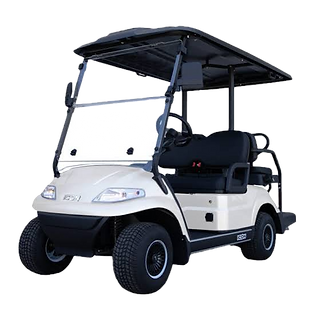
A golf cart is a motor vehicle with not less than three wheels capable of a speed no greater than 25 mph and carries no more than four people including the driver. On private property such as golf courses, no requirements are needed. May cross the incident to golf play. A neighborhood electric vehicle must be emission free, carry four or fewer persons, operate at less than 25 mph, and have four wheels. It shall not be operated on a roadway posted at more than 35 mph, except to cross such a road. Both must be registered and insured, and the driver must be licensed if operated. Laws governing these are found in: A.R.S. 28-101.33 (Golf Cart) ~ A.R.S. 28-101.46 (Neighborhood Electric Vehicle) ~ A.R.S. 28-2153 A.R.S. 28-904 ~ A.R.S. 28-955